Blending two-dimensional drawing and three-dimensional sculptures in an original way, Giovanni Pinosio tackles complex elements such as the void and the immaterial.


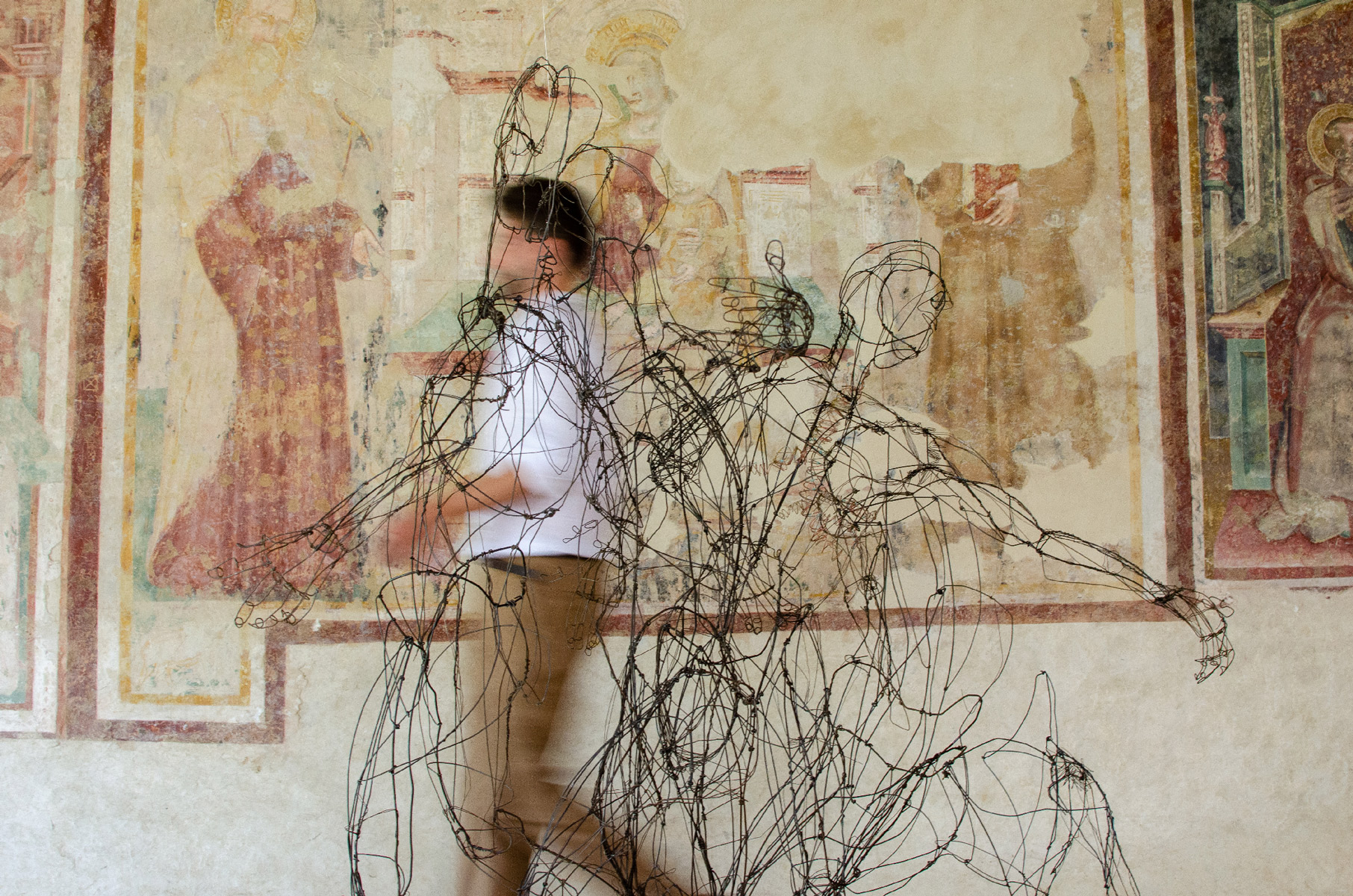
Oratorio di Santa Maria
Assunta, Spinea,
Venezia
Blending two-dimensional drawing and three-dimensional sculptures in an original way, Giovanni Pinosio tackles complex elements such as the void and the immaterial.
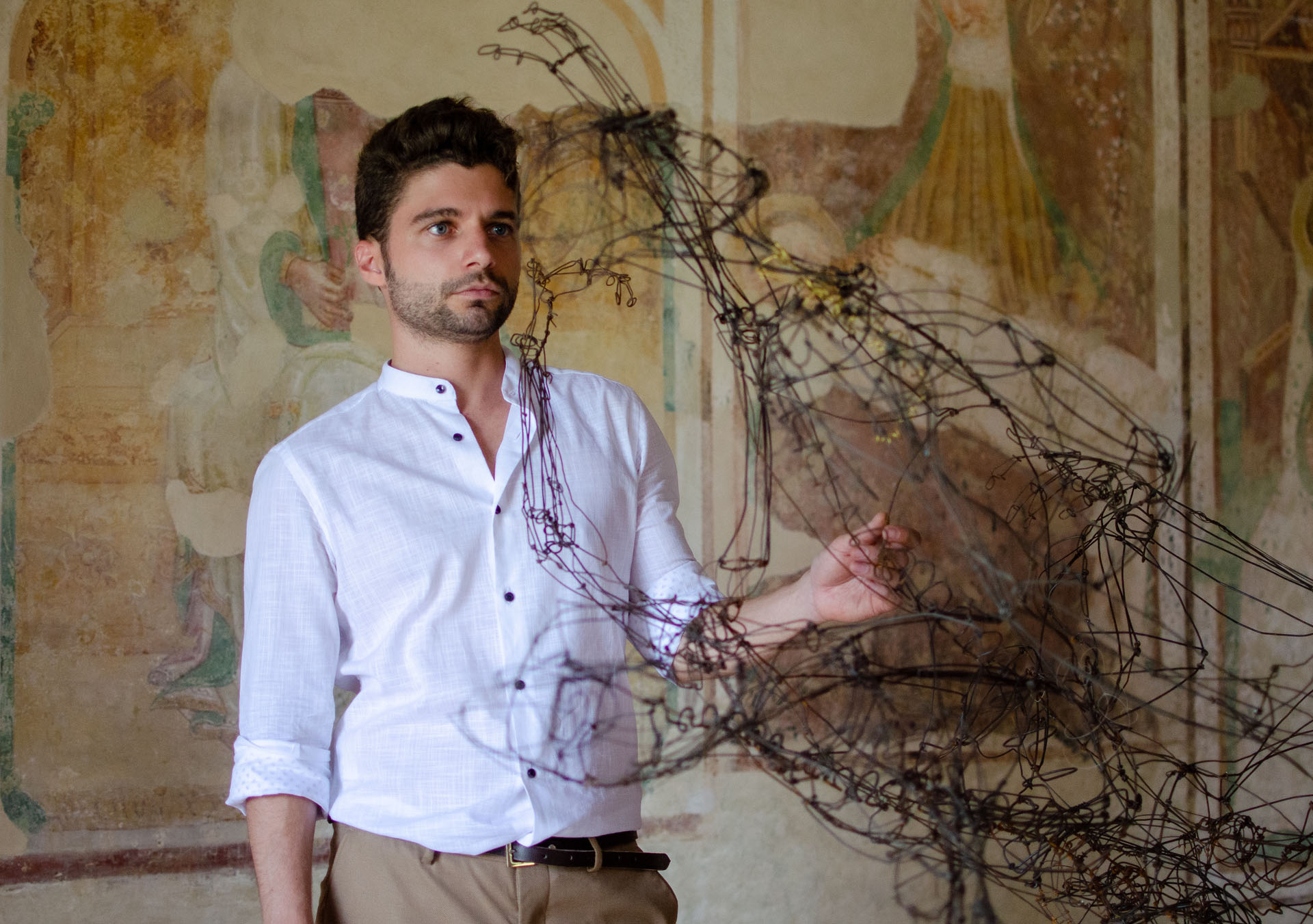
Giovanni Pinosio is a young artist from Venice, with an education in arts that has led him to master the “belle arti”, with a preference for drawing and sculpting – or, to be more precise, for an original combination of two-dimensional drawing and three-dimensional sculpture, which he realises by composing his figures through the use of complex elements such as the void and the immaterial.
Let’s imagine a pencil’s lead sliding on a blank sheet and drawing hybrid segments of a figure: man is at the core of Pinosio’s research, a male figure though not sexually characterised. Traces of a torso or a wobbling hand appear – a gesture that is replicated thus taking up space – or again traces of part of a leg.
If we substitute iron wire for pencils and try and compose that figure in space, the image will find itself in space, acquiring a metaphysical third dimension.
Our body is a thick casing of flesh, lying on a supporting skeleton.
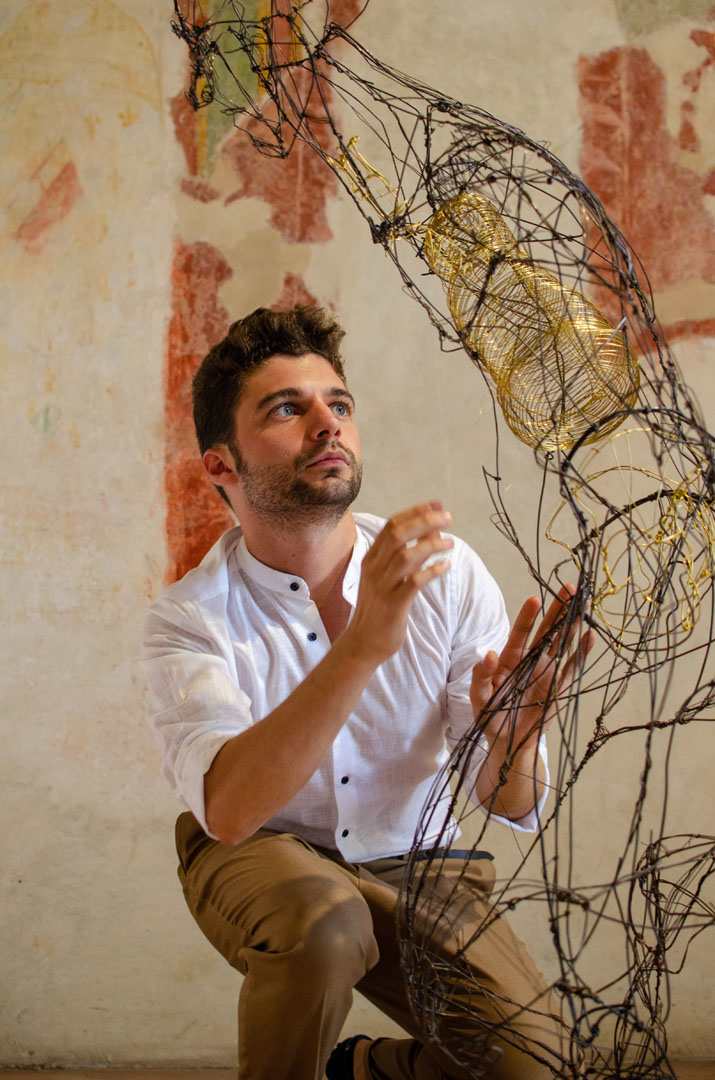
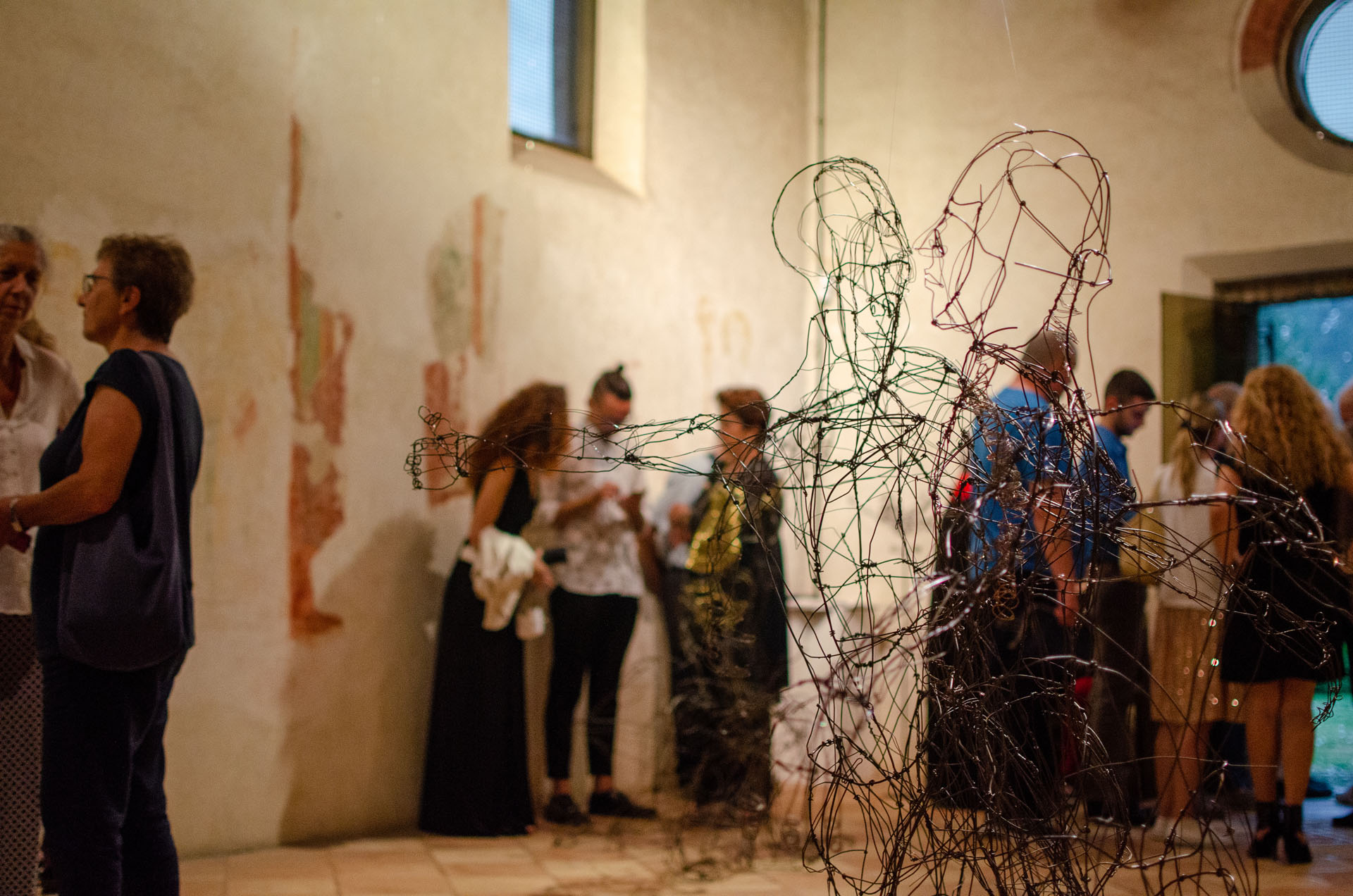
Pinosio in his works replaces the exterior with the interior: it is the iron wire skeleton that creates the figure, which is never completely finished – a hybrid in itself, while the inner part of the statue is not there: it is “empty”.
As for the making of his works, the artist – who masters anatomy drawing – takes from his drawing those lines and planes which he then transfers from a horizontal to a vertical plane in order to compose a three-dimensional body.
Empty spaces represent a challenge in this idea of sculpture, because the surroundings enter the body of the work, becoming indistinguishable from the space.
And even if emptiness is the ultimate challenge in sculpture – which typically relies on fullness – it is also the imminence of the surrounding space, going in and out through Pinosio’s sculptures, which adds to their inventiveness.
One more imperceptible, invisible element acts as a leading “thread” here. Not only air, circulating through the empty spaces of the sculptures – but also voice. Pinosio’s artistic output, in fact, has also been influenced by his experience as a singer. During his years at the Accademia he availed himself of his research on voice: everything gained more lightness – a lightness which found its form in sculpture.
Voice is the invisible border between the material and the immaterial. We can hear it, enjoy it, but we can’t touch it. All the same, our voice is the most powerful manifestation of ourselves. In this research, where voice and emptiness were pivotal in conceiving this exhibition, Pinosio inserts in his sculptures, using brass wire, inner organs like trachea, larynx, lungs – those body organs where air becomes voice. And even if this exhibition is called A Voice on the Wire, Pinosio’s voice is a pure song of art in the contemporary art world.
Critical text by Barbara Codogno